Web design Canberra: accessible websites and SEO for ACT organisations
Web design for Canberra businesses, associations and suppliers who work in and around the public sector. Accessible, fast, and built so you can answer the questions a tender puts to you without scrambling.
Canberra also has the thinnest search competition of anywhere we measured in Australia. When we checked the main local SEO term in August 2026, the weakest organisation holding a first-page position had links from seven other websites. That is a low bar, and it will not stay that way.
What does accessible web design in Canberra actually mean?
An accessible website still works for someone using a screen reader, navigating by keyboard, or reading at high magnification. The standard is WCAG, published by the W3C. In Canberra it matters more than elsewhere, because tenders and contracts often ask which standard your site meets, and “we do not know” costs you work.
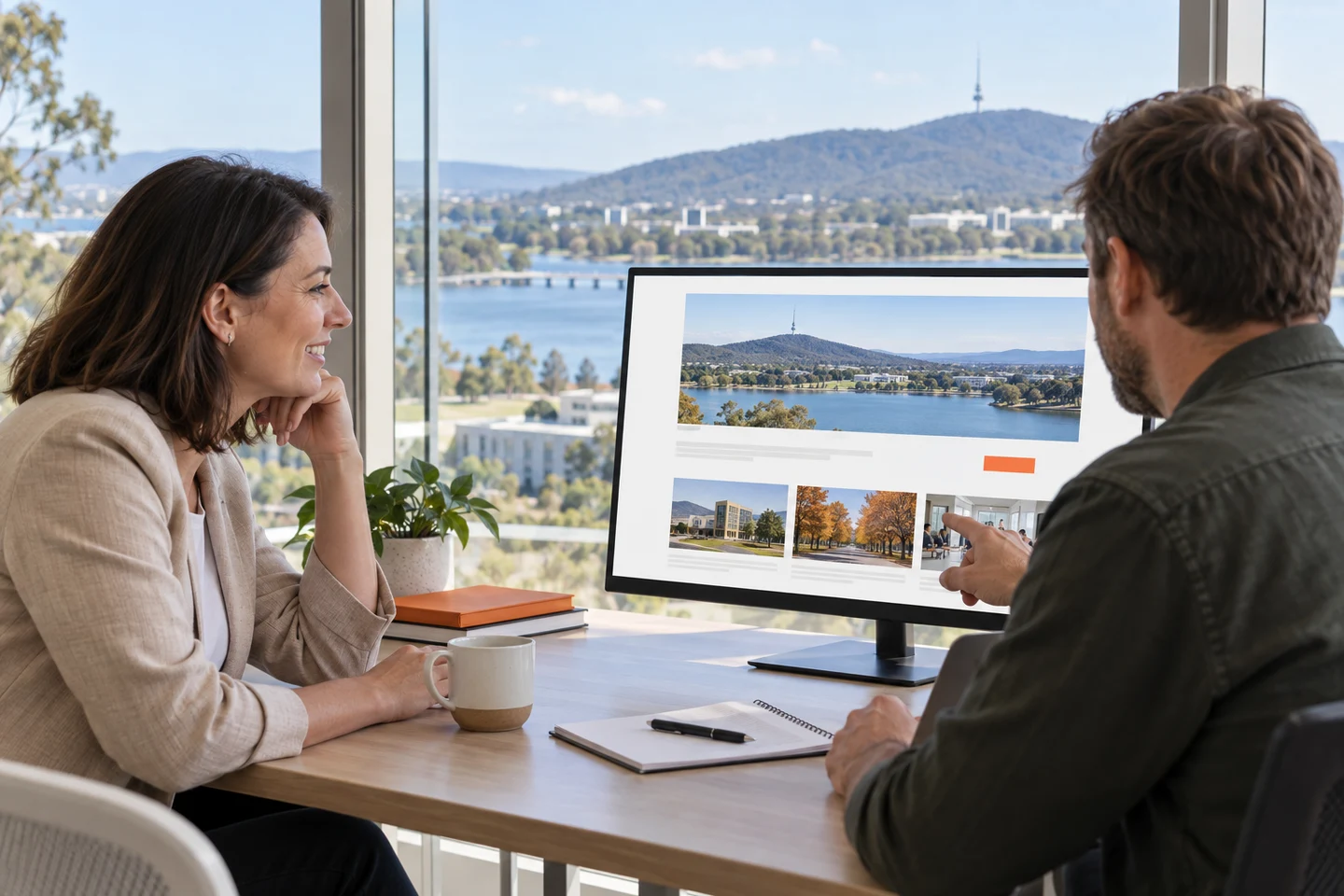
What accessible web design in Canberra involves, in plain English
The W3C publishes WCAG as an international standard, currently spanning versions 2.0, 2.1 and 2.2.[1] Each version is a list of testable success criteria, grouped into three levels: A, AA and AAA. When a Canberra tender asks about accessibility, it almost always means a named version at level AA.
We are not going to tell you what the law requires of your organisation. That depends on who you are and what you have signed, and it is a question for your own legal advice rather than for a web agency. What we can tell you is the practical position: the question gets asked, an honest answer of “we do not know” costs you work, and the underlying fixes are neither expensive nor ugly.
Sites fail these checks through inattention rather than through a design decision. That is also why retrofitting an existing site is usually less work than the rebuild people expect.
- Where we workCivic to Tuggeranong, plus QueanbeyanACT-wide
- Who it is forassociations, suppliers, not-for-profitsVerified reads
- How it startsfree review, then a written scopeFree
- Where the team sitsremote, Australian business hoursNo office
Seven accessibility basics that cover most of what a checker tests
Open any item to see what it means and why it fails so often. None of it makes a site look worse, and most of it is invisible to people who do not need it.
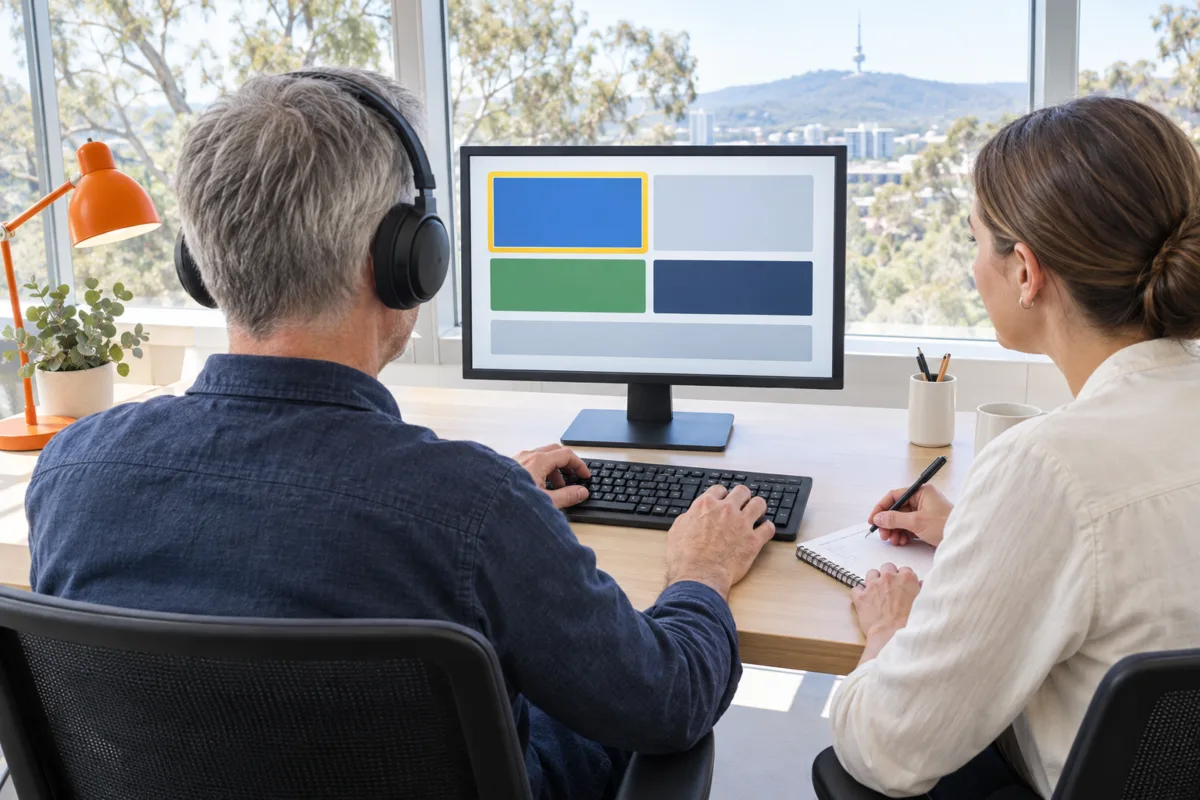
Every image carries a text description
A screen reader reads the description aloud, so someone who cannot see the photo still gets its meaning. Decorative images are marked so they are skipped rather than read as noise.
The whole site works with a keyboard alone
Menus, forms, pop-ups and buttons can all be reached with the Tab key, with a visible focus outline showing where you are. Keyboard traps, where you can get into a menu but not out, are one of the most common failures we find.
Text has enough contrast against its background
Light grey text on white looks elegant and fails people with low vision and anyone reading a phone in the sun. WCAG sets measurable contrast ratios, and we check every colour pair in the design.
Form fields have real labels
Placeholder text that disappears when you start typing is not a label. Each field needs a label linked to it in the code, and error messages that say what went wrong in words, not only in red.
Headings run in order and describe the section
Screen reader users jump through a page by its headings, like a table of contents. One H1, then H2s and H3s in order, each saying what the section is about.
Nothing depends on colour alone
A red asterisk is not enough to mark a required field, and a green or red dot is not enough to show status. Add a word or an icon so the meaning survives for people who do not see colour the same way.
Documents are real pages where possible
Scanned PDFs cannot be searched, read aloud or resized well on a phone. Publishing the content as a page, with the file as a second option, fixes accessibility, search and mobile reading in one move.
Level A
The minimum. Without it, some people cannot use the site at all: images with no description, content you cannot reach by keyboard, video with no captions.
Level AA
The level most organisations and most tender forms mean. Adds contrast ratios, consistent navigation, visible focus and clear error messages. Our default build target.
Level AAA
The strictest level. Useful for specific pages or audiences, but not realistic across every page of a typical site. We apply parts of it where it makes sense.
Source [1]: W3C Web Accessibility Initiative, Web Content Accessibility Guidelines (WCAG) Overview. This page describes accessibility as a practical requirement; it does not state any legal obligation.
Canberra buyers check before they browse
Nationally, 2,814,778 businesses were actively trading at 30 June 2026, with a 16.9% entry rate and a 13.8% exit rate across the year.[2] Canberra is a small slice of that, and an unusual one. A large share of the organisations here do not sell to consumers at all. They sell to departments, to members, or to funders.
That changes the job of the website. A consumer visits a site to be persuaded. A Canberra buyer visits to verify. They are checking whether your organisation is real, current, credentialled and still operating, usually before any conversation happens and often as part of a formal process. A site that reads as marketing rather than as evidence performs badly with that reader.
The most common failure we see here is staleness. A news page whose last item is from two years ago, a team page listing people who have left, a document library of scanned files. Each quietly signals that the organisation may not be active. For a consumer site that is untidy. For an organisation being assessed, it can be disqualifying, and it is quick to fix.
- Which accessibility standard and level the site meets
- Where the data is hosted and who can reach it
- How personal information is handled
- Who owns the code and the accounts
- Whether you can show the same work live elsewhere
Source [2]: Australian Bureau of Statistics, Counts of Australian Businesses, including Entries and Exits, release dated 18 August 2026.
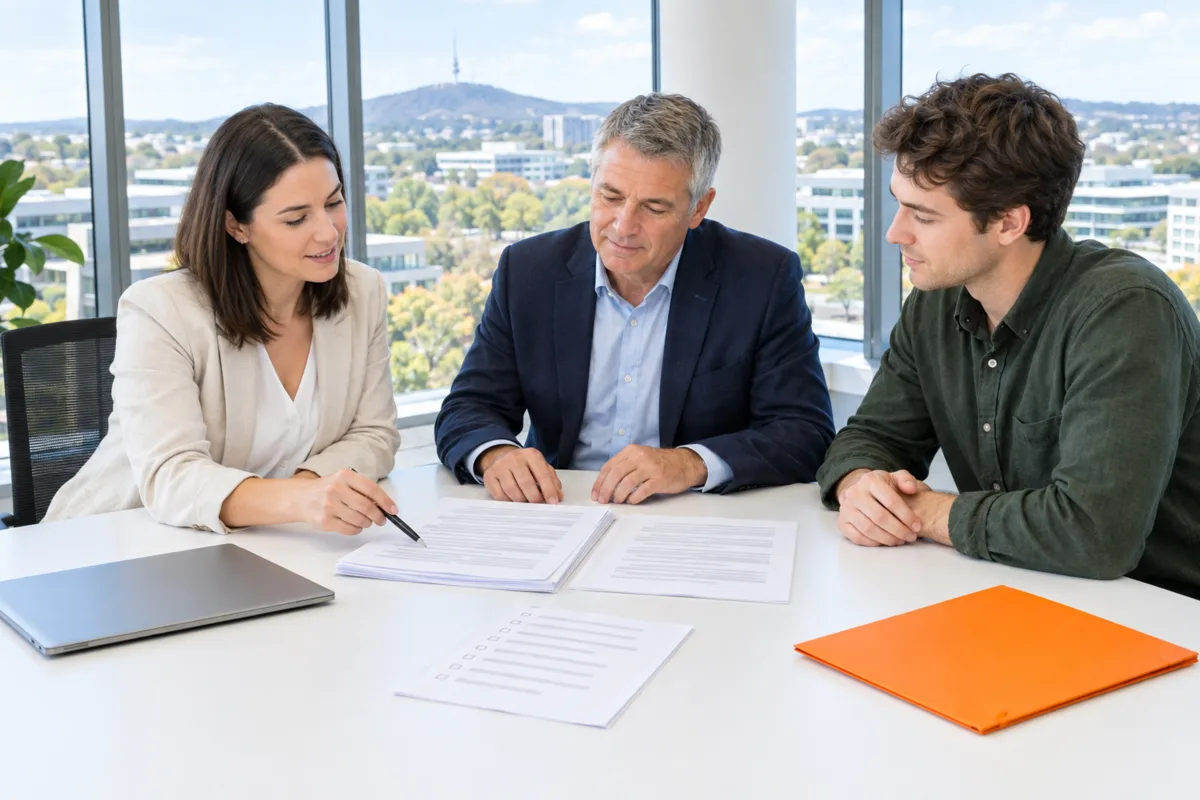
Associations and peak bodies
Concentrated in Barton and Civic. Their site does three unrelated jobs at once: recruit members, publish advocacy positions, and prove legitimacy to a department. Most try to do all three on the home page and do none of them well.
Public-sector suppliers
Consultancies, IT firms, training providers and facilities businesses. The website is read during a procurement check rather than browsed, so evidence, currency and specificity matter far more than persuasion.
Not-for-profits and charities
Two audiences with opposite needs: people seeking help, who need plain language and an obvious next step, and funders, who need governance and impact evidence. These deserve separate paths.
Professional services
Accountants, lawyers and advisers across Civic and Woden. A conventional local search market, and the one where Canberra’s thin competition is easiest to take advantage of.
Trades and home services
Across Belconnen, Tuggeranong and Gungahlin, plus Queanbeyan. Phone-first buyers, Maps-driven, where a complete Google Business Profile does more work than the website.
Research, education and training
Registered training organisations, research groups and education providers. Course and program pages that are accurate, current and accessible do most of the selling, and stale dates cost enrolments.

Turn your reports and submissions into real web pages
Annual reports, submissions, position papers and capability statements are the most valuable content most Canberra organisations own. They are usually the least visible, sitting as PDFs in a downloads list that nobody opens and Google barely reads.
Published as pages, the same content does four jobs at once. It becomes searchable, so a department officer typing your topic into Google finds your position. It becomes readable on a phone. It becomes accessible to a screen reader, which scanned files often are not. And it becomes something other sites can link to, which is how a Canberra association earns search authority without buying anything.
The file stays available as a download for people who want it. We usually start with the three or four documents that get asked for most, and set up a simple template so your team can publish the next ones themselves in minutes.
Build it to be checked, then get it found
Those are the two jobs in this city, in that order. A Canberra site that cannot survive a verification read does not benefit from more traffic. Once it can, the search side here is more winnable than anywhere else in the country.
Web design in Canberra
Accessible from the first commit
We build against the WCAG success criteria as we go and hand over a written test result at launch. Retrofitting accessibility after a site is finished costs more than including it and gives a worse result, because some failures are structural rather than cosmetic.
Built to be verified, not just admired
Named credentials, dated projects, real people with real roles, and the currency signals a checker looks for. If your last news item is from 2024, that is the first thing an assessor notices. We build the site so keeping it current takes minutes rather than a support ticket.
Documents turned into pages
Annual reports, submissions, position papers and capability statements usually live as files in a downloads list. Published as real pages, they become searchable, readable on a phone, accessible to a screen reader, and findable in Google.
Speed measured against the published marks
Google publishes what it judges: Largest Contentful Paint within 2.5 seconds, Interaction to Next Paint under 200 milliseconds, and Cumulative Layout Shift under 0.1. We build to those and show you the before and after.
Separate paths for separate audiences
Members and departments. People seeking help and people funding it. Where an organisation has two audiences, it needs two clear routes from the home page rather than one message hedging between them.
Code and accounts in your name
Domain, hosting, source code and admin access, all yours from day one. This matters more in Canberra than elsewhere because contracts and grant conditions often ask who owns the work. The answer should be you, and it should be provable.
SEO in Canberra
A genuinely open field, for now
The weakest organisation holding a first-page Canberra SEO position had links from seven other websites when we measured in August 2026. In Sydney the equivalent figure was 119. That gap exists because Canberra is small enough that few agencies compete here properly.
Demand verified before anything is written
We check search volume against Google Ads data rather than trusting impression counts, which rank-tracking software can inflate. Canberra is small, so some terms that look worthwhile have almost no real volume. We say so rather than building pages to fill a content plan.
Honest about when search is the wrong tool
Many Canberra organisations reach their audience through member networks, mailing lists or formal processes, not a search box. For those, search work is a poor use of money and we will tell you.
Local listing done once, properly
Google Business Profile claimed, verified, categorised specifically, and set to the areas you genuinely serve. Google requires in-person customer contact for a listing, so a consultancy operating entirely online does not qualify. We will tell you before you try.
Links earned, never bought
Submissions, research, member resources and genuine sector relationships earn references in this city. We do not buy links or run automated outreach. Associations have an advantage here, because they already publish material other sites cite.
Reporting aimed at what you need
For a supplier that means enquiries. For an association it might be membership applications or document downloads. We agree the number before the work starts and report against it, not against a rankings dashboard.

Accessible website design in seven steps, planned around your approvals
Canberra organisations usually have a board, a committee or a delegate who signs off. We plan the schedule around those dates rather than pretending they do not exist. Open any step to see what you get.

01Free review, including an accessibility check
We crawl the site, test sample pages against the WCAG criteria with automated tools and a keyboard, run Core Web Vitals, and check your Google listing.
You get: A short written summary you can act on, or attach to a tender response.
02Written scope with the accessibility level named
Pages, content, integrations, the WCAG version and level you need, hosting and data questions from your contracts, and the approval points inside your organisation.
You get: A fixed-scope proposal, with a timeline planned around your board or committee dates.
03Audience paths and site map
A workshop, by video, where we draw the pages and the separate routes for each audience: members and departments, clients and funders.
You get: An agreed site map and a list of which documents become pages.
04Plain-language content and design
Copy written for your audience rather than your sector, with headings that work as a table of contents. Design checked for contrast and focus states from the first draft.
You get: Approved page designs with real content in them.
05Build and test with real assistive technology
Automated checks catch part of the problem. We also test with a keyboard alone and a screen reader, on real phones, before anything goes live.
You get: A staging site with a written accessibility and speed report.
06Launch without losing what already ranks
Every old page address mapped to a new one, Search Console and Analytics in your name, and the Google listing updated. Sites of up to five pages can have 7-day delivery once content and approvals are ready.
You get: A live site and a launch checklist signed off.
07Keep it current and accessible
Accessibility drifts as people add content. We check new pages, keep the site updated, and run search work if you want it, reported against the number you care about.
You get: Support from the team that built it.
Next step
Find out whether your site would pass an accessibility check
Send us your address. We test the site against the WCAG criteria, crawl it for technical faults, and measure the organisations currently holding the Canberra positions you want. You get a short written summary you can act on or attach to a tender. No charge.
DIY builder vs freelance web designer vs Canberra studio vs FactoryJet
Canberra has capable studios, and the right one depends on whether you need brand work, an accessible site that will pass a tender review, or an ongoing search programme. Few firms are strong at all three.
| What you get | FactoryJet | DIY website builder | Freelance web designer | Canberra design studio |
|---|---|---|---|---|
| Best fit | Sites that must pass a check and be found | Simple sites you maintain yourself | Small sites, clear brief | Brand and design-led work |
| WCAG level AA as standard | Yes, with a written test result | Depends on the theme | Varies | Often, ask for evidence |
| Keyboard and screen reader testing | Before launch | On you | Rarely formal | Varies |
| SEO and Google listing | Same team, measured | On you | Sometimes | Often a partner |
| Ownership of code and accounts | Yours, provably | Inside the platform | Check the contract | Check the contract |
| Support after launch | The team that built it | Platform help desk | If available | Usually, on retainer |
| Local office in Canberra | No, remote in Australian hours | Not applicable | Often | Yes |
A quick check: what does your Canberra organisation actually need?
Open the description that sounds most like you. The honest answer is not always a new website.
A tender asks about accessibility and we do not know the answer
Start with an audit, not a rebuild.The free review tells you where the site stands against WCAG. Many failures are quick fixes on the existing site.
Our audience finds us through members, mailing lists or a formal process
Skip search work.Spend on a current, accessible, verifiable site and on turning documents into pages. SEO would be a poor use of money for you.
We are a local business and want more calls from Canberra suburbs
Local SEO first.Google listing, reviews and suburb pages. See our SEO services in Australia.
We want to sell memberships, courses or products online
That is a store or platform build.See Shopify development or ecommerce development in Australia.
We want AI assistants like ChatGPT to cite our positions and research
That is AI search visibility.Publishing documents as pages is the first step; see our AI SEO service for Australian organisations.
Our team spends hours on member enquiries and admin
Look at automation.See our AI agents and AI consulting work, which keeps people approving what matters and handles personal information under the Privacy Act.
The search side, and why it is unusually open right now
Canberra had the thinnest competition of any Australian market we measured in August 2026. On the main local SEO term, the weakest organisation holding a first-page position had links from seven other websites. On the main web design term it was twenty one. Both are inside reach of a well-built new site, which is not true in any other capital. Google also showed no AI Overview on either term, so an ordinary ranking still earns the visit.
For local businesses the map results matter most. Google ranks them on relevance, distance and prominence. Distance is fixed: a Tuggeranong plumber will show for a Tuggeranong searcher before a Gungahlin one. Relevance and prominence are where the work is: a specific primary category, service areas set honestly, real photos, reviews with replies, and suburb pages that match the listing.
Queanbeyan is a common edge case. A business there serves Canberra customers but sits across the border in New South Wales. The listing should show the real address and list the Canberra districts it serves; the website should say plainly that you cover the ACT. Pretending to have a Canberra address is how listings get suspended.
One honest note about us. FactoryJet has no Canberra office. That makes no difference to your own map ranking, which depends on your address and your listing. If a tender asks for local presence, tell us at the start and we will help you answer it truthfully.
- Primary category and servicesthe most specific one that fitsRelevance
- Reviews asked for and answereda repeatable systemProminence
- In-person customer contactrequired by Google for a listingEligibility
- Where the searcher is standingnobody can change thisDistance

Canberra web design and SEO demand, measured
These are monthly Google searches in Australia for the main Canberra web design and SEO terms, measured in September 2026. Google reports close variants with one shared figure, so the rows overlap and should not be added together.
Unlike Adelaide, web design searches in Canberra run level with or ahead of SEO searches. That fits a city where many organisations need a better site before they need more traffic. It is also why we lead with the build here.
Canberra is a small market, so some terms that look worthwhile have almost no real volume. We check the demand for your own services before recommending search work.
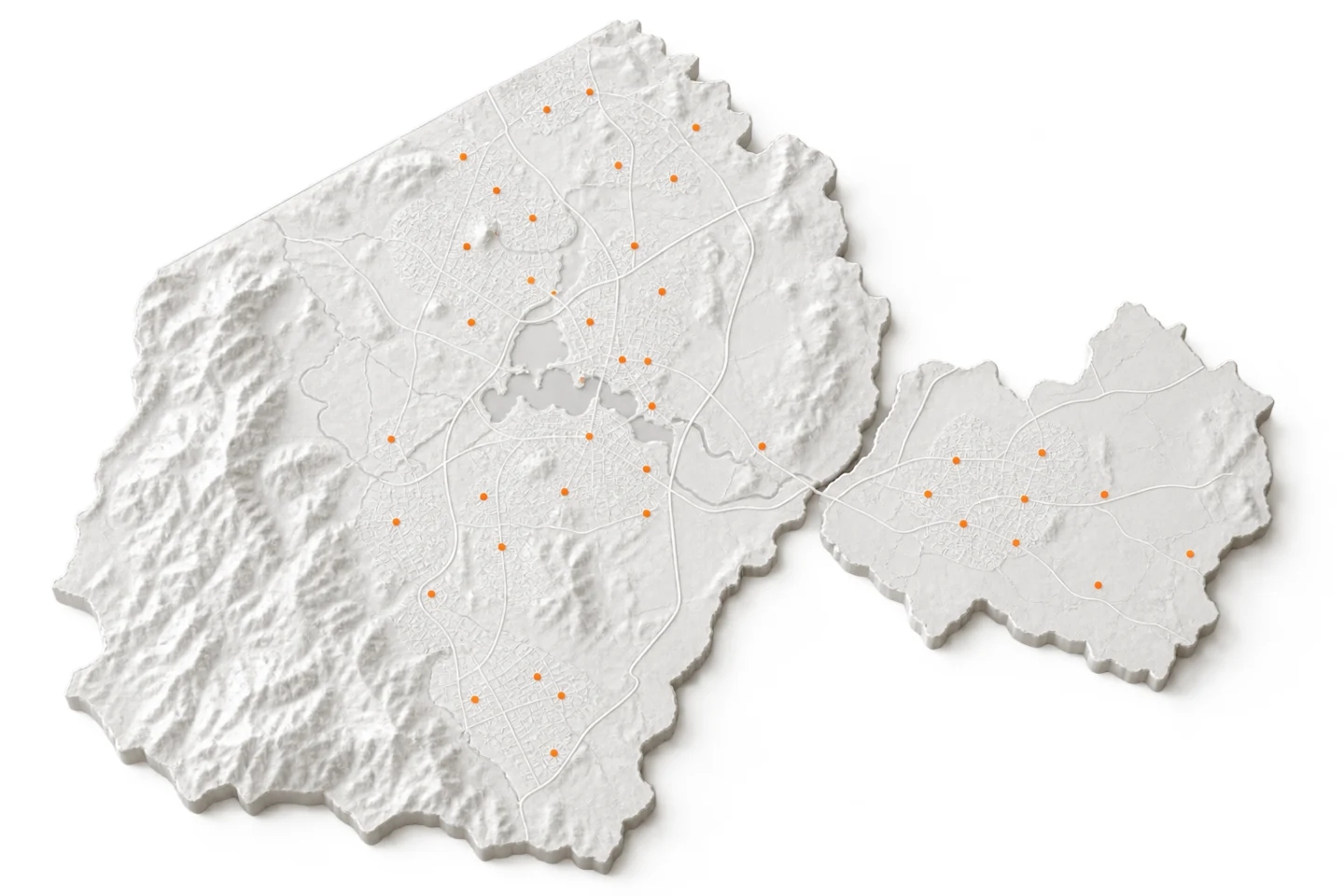
- Canberra City
- Barton
- Braddon
- Belconnen
- Woden
- Tuggeranong
- Gungahlin
- Fyshwick
- Mitchell
- Queanbeyan
All projects run remotely in Australian business hours, with the founder involved in every one.
- web design canberra1,000 searchesShared by close variants: canberra web design, web developer canberra
- web designer canberra880 searchesBuyers looking for one named person or studio
- seo agency canberra880 searchesShared with seo company canberra
- seo services canberra260 searchesBuyer intent
- seo consultant canberra170 searchesBuyer intent
- local seo canberra110 searchesMostly trades and clinics
- web design company canberra70 searchesBuyer intent
Source: DataForSEO, Google Australia, September 2026
What decides the cost of web design in Canberra
No price figures appear on this page on purpose. Accessibility retrofits vary enormously depending on how the existing site was built, and a number posted here would mislead most readers. Published market ranges are in our website cost guide and SEO cost guide. Work usually takes one of four shapes.
Free review.
Accessibility sample test, crawl, speed check and Google listing check, in a short written summary.
Accessibility remediation.
Fixing the failures on your existing site, ranked by how many people they block, with a retest.
Website build.
A fixed-scope accessible design and build. Sites of up to five pages can have 7-day delivery once content and approvals are ready.
Support and search.
Keeping content current and accessible, plus search work if your audience actually searches. Monthly fixes and updates are covered by our website maintenance plans.
- Number of pages and documentsSize
- WCAG version and level requiredAccessibility
- Memberships, events or paymentsIntegrations
- Hosting and data conditions in contractsSecurity
- Approval rounds inside your organisationTime
- First review and callFree
Related services and the other cities we work in
Start at FactoryJet Australia for the full picture, or go straight to the service that fits.
- Web design AustraliaOur national web design and development page: how we build, what you own, and the full service list.
- SEO services AustraliaTechnical SEO, content and local search for Australian organisations, reported against what you need.
- AI SEOGet your organisation cited in ChatGPT, Perplexity and Google AI answers.
- AI consultingWhere AI fits in your organisation, ranked by value and risk, with Privacy Act considerations up front.
- Ecommerce developmentMembership, course and product sales built into your site, owned by you.
- AI agentsAutomation for enquiries and admin that works inside your existing tools, with people approving what matters.
32 questions Canberra organisations ask about web design and SEO
Each one comes from the People Also Ask questions Google shows Australian searchers. The accessibility answers describe what the standard asks, not what the law requires of you, which is a question for your own legal advice.
Replies within one business day.
Q01What is web accessibility and does my site need it?
Accessibility means people using a screen reader, a keyboard instead of a mouse, or a magnified screen can still use your site. The international standard is WCAG, published by the W3C. Whether you are formally required to meet it depends on who you are and who you contract with, and that is a question for your own legal advice. What is not in doubt is that Canberra tenders ask about it, so being unable to answer costs you work.
Q02Is WCAG a legal requirement in Australia?
WCAG itself is not written into law for most private businesses, but disability discrimination law still applies. The Disability Discrimination Act 1992 applies to government, public sector and private organisations, and it does not name a WCAG version. The Australian Human Rights Commission says all organisations should aim to provide equal access to digital goods and services. For federal government, the Digital Experience Policy points to WCAG 2.2. In practice, WCAG 2.2 level AA is the benchmark to build to. For your own obligations, get legal advice.
Q03What are common WCAG violations?
The WebAIM Million, an annual automated scan of one million home pages worldwide, found detected WCAG failures on 95.9% of them in 2026. The six most common were low contrast text, images missing alternative text, form fields without labels, empty links, empty buttons and a missing page language. WebAIM says those six make up about 96% of all errors it detected. Most are quick to fix once someone looks.
Q04What makes a website accessible?
The basics cover most of it: every image has a text description, the page works using only a keyboard, text has enough contrast against its background, form fields have real labels, headings run in order, and nothing relies on colour alone to convey meaning. None of that is exotic and none of it makes a site uglier. Most inaccessible sites got that way through inattention rather than a decision.
Q05Can you make an existing website accessible?
Usually yes, and it is often less work than a rebuild. We audit against the WCAG success criteria, list what fails, and rank the failures by how many people they actually block. Contrast, missing labels and keyboard traps are typically quick to fix. Sites built entirely on a drag-and-drop builder are the hard case, because the underlying code is not yours to correct.
Q06What do government tenders ask about websites?
Commonly: whether the site meets a named accessibility standard, where the data is hosted, how you handle personal information, who owns the code, and whether you can demonstrate the same work elsewhere. The pattern is that they want evidence rather than assurance. Being able to point at a live site and a test result answers more of the form than any amount of description.
Q07Which WCAG level should a Canberra website aim for?
WCAG sets three levels of conformance: A, AA and AAA. Level AA is the one most organisations and most tender forms mean when they ask about accessibility, and it is what we build to by default. AAA is stricter and not realistic for every page of a typical site. Check what your own contracts or funding agreements name, and build to that version, currently WCAG 2.1 or 2.2.
Q08Can a site built on a website builder be made accessible?
Partly. You can fix what you control: image descriptions, heading order, link text, colour contrast in the theme, and plain language. What you usually cannot fix is the underlying code the builder generates, such as menus that trap keyboard users or forms without proper labels. If an audit finds failures in those parts, the realistic options are a different theme, a different platform, or a rebuild.
Q09How much does it cost to design a website in Australia?
It depends on page count, whether content already exists, and what the site must connect to. For Canberra specifically, accessibility work and any security or hosting requirement attached to a contract will move the number, so those need to be on the table at scope rather than discovered later. We review, write a scope, and price that before you commit. Published Australian ranges are in our website cost guide.
Q10How many pages should a good website have?
Enough to answer what your audience asks and no more. An association usually needs membership information, what it advocates for, its people, its publications and a way to join. A supplier selling into government needs capability, evidence, compliance and contact. Extra pages nobody searches for do not help you rank and do add maintenance.
Q11Is there a monthly fee to have a website?
Yes, usually small: the domain yearly and hosting monthly or yearly. If your site takes memberships, event bookings or payments there is normally a platform or transaction fee too. What you should not pay is a monthly fee simply to keep pages online with an agency holding the keys. That arrangement is common and it is worth checking your current contract for.
Q12How much does a web designer cost in Canberra?
We do not publish a figure, because it moves with four things: the number of pages, whether the content exists, what the site connects to (memberships, events, payments), and how much accessibility and security evidence your contracts need. A freelancer, a Canberra studio and a senior remote team will quote the same brief differently. Give each the same written scope, including the accessibility level, so the quotes are comparable.
Q13How long does it typically take to build a website?
A few weeks from approved scope to launch for a straightforward site, and the build is rarely what holds it up. Content, sign-off and, in Canberra, internal approval processes are. Organisations with a board or a committee should add time for that, and we plan the schedule around approval dates rather than pretending they do not exist.
Q14How do I increase my website speed?
Measure before you change anything. Google publishes the marks it uses: Largest Contentful Paint within 2.5 seconds, Interaction to Next Paint under 200 milliseconds, and Cumulative Layout Shift under 0.1. Most slow sites fail on oversized images loading before anything else. Compress them, use a modern format, and remove plugins nobody uses any more.
Q15What are common website mistakes?
For Canberra organisations specifically: writing in the language of your own sector rather than your audience, burying the thing most visitors came for under an About menu, publishing documents as scanned files nobody can search or read aloud, and leaving out any way to contact a human. The last one is more common on association sites than anywhere else.
Q16How can I make my website mobile-friendly?
Test on a real phone, not a resized browser. What usually breaks is text too small to read, buttons too close together to tap, forms pushing the submit button off screen, and tables forcing sideways scrolling. Tables are the common one for organisations publishing data. Google indexes the mobile version of your site, so the phone view is the real one.
Q17Is it mandatory for a company to have a website?
No, there is no general legal requirement to have one. What is often effectively required is being findable and verifiable, which matters more in Canberra than most places because so much work here starts with someone checking whether an organisation is legitimate before making contact. A complete Google Business Profile can cover that at the very small end.
Q18Is web design still in demand in 2026?
Yes. Google Australia data from September 2026 shows around 1,000 searches a month for web design in Canberra and its close variants, and 880 for a web designer in Canberra. What buyers expect has moved: fast pages on a phone, accessible by default, and content clear enough for AI search tools to quote. Sites that only look good are the part of the market losing ground.
Q19How long does SEO take to show results in 2026?
Google says some changes take effect within hours and others take months, and advises waiting a few weeks before judging one. Canberra is a small search market with correspondingly little entrenched competition, so movement here tends to come faster than in Sydney or Melbourne. When we measured the main Canberra SEO term, the weakest business holding a first-page position had links from just 7 other websites.
Q20Does SEO work for small businesses?
It works when people search for what you sell and you are not currently there. In Canberra it works particularly well for local services, because the competition is thin. It works poorly for organisations whose audience finds them through a mailing list, a member network or a government process rather than a search box, and a fair number of Canberra organisations are in that group.
Q21How to tell if your SEO is working?
Agree two numbers up front: enquiries from organic search, and impressions on a named list of terms you care about. Both come from Search Console and Analytics, which you own. If a report leads with rankings and buries the rest, ask why. Positions are the easiest number to present well and the least connected to anything that matters.
Q22What is the difference between SEO and technical SEO?
Technical SEO is about whether search engines can reach, read and index your pages at all. Broader SEO is about whether those pages deserve to rank once they can. Technical work is finite and mostly one-off. Content and authority work is ongoing. Doing the second before the first is the most common way to waste money on search.
Q23Why is Google not crawling my website?
The usual causes, in the order worth checking: a robots.txt rule blocking the pages, a noindex tag left from a staging site, content that only appears once JavaScript runs, no internal links pointing at the page, or a site too new to have been reached. Search Console names the exact cause in its page indexing report, which is the fastest place to look.
Q24Is SEO replaced by AI?
No. People still search Google, and when we measured the main Canberra web design and SEO searches in August 2026 Google showed no AI Overview on either, so an ordinary ranking still earns the visit. Buyers also ask ChatGPT and Perplexity for recommendations, and those tools read the same pages. Specific, well-structured, accessible pages serve both. Our AI SEO page covers the AI side.
Q25Where can I find SEO services in Canberra?
Look at who ranks in the ordinary results for the terms you want, ask organisations in your sector who they used, and ask each candidate who does the work, how they report, and what you keep if you leave. Canberra is a small market, so many providers serve it remotely, us included. What matters is whether their answer to your specific problem is concrete.
Q26Where can I find web designers in Canberra?
Search the terms you actually want to win and see who ranks, since that is a demonstration rather than a claim. Ask other organisations in your sector who they used and what went wrong. Then ask each candidate who does the work, what happens if you leave, and whether they can show you a site they built two years ago and run a speed test on it now. Three conversations is usually enough.
Q27Which web design company is considered the best in Canberra?
There is no agreed answer, and any agency answering this with its own name is telling you how it sells rather than what is true. Canberra has capable studios, and the right one depends on whether you need brand work, an accessible site that will pass a tender review, or an ongoing search programme. Those are different skills and few firms are strong at all three.
Q28How can I get my business to show up on Google Maps?
Create a Google Business Profile and verify it, which is where most people stall. Verification is by phone, email, video or postcard depending on the business type. Then complete every field, choose the most specific primary category, and add real photographs. Ranking leans heavily on how close the searcher is, so a Civic address and a Tuggeranong address will not perform alike on the same query.
Q29Is a Google Business Profile free?
Completely. Creating, verifying and maintaining one costs nothing and there is no ongoing charge. If someone rings claiming your listing will be suspended unless you pay, it is a scam. Google Ads is a separate paid product and buying it has no effect on your free listing in either direction.
Q30Why is my business not showing up on Google?
Most often the profile is unverified, duplicates an older listing, or has been suspended for a guidelines breach, commonly a service-area business displaying an address it should have hidden. It can also be that you are checking from somewhere far away, since Maps results shift with the searcher. Check status, then duplicates, then categories.
Q31Can anyone make a Google Business Profile?
Anyone with a business that has customers can, but Google requires the business to make in-person contact with customers, either at a location or by travelling to them. A business operating entirely online with no face-to-face contact does not qualify. That rules out a fair number of Canberra consultancies, and trying anyway usually ends in a suspension.
Q32Does FactoryJet have an office in Canberra?
No. We work with Canberra organisations remotely, with video workshops and calls in Australian business hours, and the founder is involved in every project. If a tender asks for a local presence, tell us early so we can answer it honestly. Your own Google Maps ranking is unaffected: it depends on your address and listing, not on where your web designer sits.
The W3C publishes WCAG as an international standard, currently spanning WCAG 2.0, 2.1 and 2.2, explaining how to make web content more accessible to people with disabilities.
The ABS counted 2,814,778 actively trading businesses in Australia at 30 June 2026, with a 16.9% entry rate and a 13.8% exit rate across 2025-26, and reports growth in every state and territory.
Google publishes the pass marks for the three Core Web Vitals: Largest Contentful Paint within 2.5 seconds, Interaction to Next Paint under 200 milliseconds, and Cumulative Layout Shift under 0.1.
Search volumes: DataForSEO, Google Australia, September 2026. Competitor link counts and AI Overview presence: measured by FactoryJet against Google Australia results in August 2026.
Find out whether your Canberra site would pass a check
Send us the address. We will test sample pages against WCAG, crawl the site for technical faults, check your Google listing, and measure who holds the Canberra positions you want. You get a short written summary you can act on or attach to a tender. No charge, no obligation.