Layer 01
Technical foundation
The most critical layer. Crawlability, indexing, redirects, canonicals, schema, and Core Web Vitals, so Google can read and trust the whole site.
Most criticalA free, expert SEO site audit that finds why you are not ranking, scores your site, and hands you a prioritized fix list. Not an automated checker spitting out 200 meaningless errors. A real technical SEO agency reading your site the way Google does. Then we can fix it.
FactoryJet provides expert SEO audit services and technical SEO for US businesses. Our free SEO site audit reviews your technical health, on-page content, Core Web Vitals, and backlinks, then delivers a plain-English SEO audit report with a prioritized 90-day roadmap. Read by a human, not generated by a checker. Founder-led, month-to-month if you want us to fix it.
An audit is only worth reading if the bar it measures you against is published somewhere you can check. Each figure below links to the source it came from. Open them.
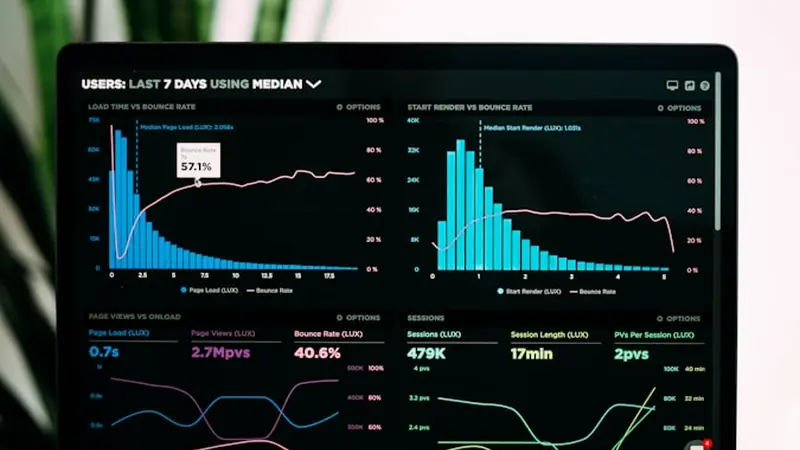
The Largest Contentful Paint threshold Google publishes for a good page experience, alongside Interaction to Next Paint at 200 milliseconds or less and Cumulative Layout Shift at 0.1 or less. All three are judged at the 75th percentile of real page loads, so one quick test on your own laptop proves nothing.
Core Web Vitals thresholds, web.devThe ceiling on a single sitemap file: 50,000 URLs or 50MB uncompressed, whichever you hit first. Past that you need a sitemap index. A sitemap.xml quietly over the limit is one of the faster findings in a technical SEO audit.
Build and submit a sitemap, Google Search CentralDomains carrying schema.org Organization markup, counted by Google against its own web index in July 2026. Structured data stopped being an edge case a long time ago. It is the floor your competitors already stand on.
Organization type usage, schema.orgA free checker only sees the surface. We score your site across the three layers that actually decide rankings, and rank every fix by impact.
The most critical layer. Crawlability, indexing, redirects, canonicals, schema, and Core Web Vitals, so Google can read and trust the whole site.
Most criticalTitles, meta, headings, keyword targeting, internal links, and content gaps against the competitors outranking you. Where most rankings are won or lost.
Where rankings liveYour link profile, toxic links, and the authority gap versus competitors. The trust layer that decides how high the rest can climb.
Earns the trustA complete SEO site audit, scored across four areas. We find what is holding you back and rank the fixes by impact, not by what is easy.
Crawl and indexing, redirects and errors, canonicals, sitemaps and robots, and schema. As a technical SEO agency, this is where we find the problems a checker tool misses.
LCP, CLS, and INP on mobile, plus render-blocking and what is actually slowing the site down.
Titles, meta, keyword targeting, internal links, and content gaps versus the competition.
Link profile health, toxic links, and the authority gap versus competitors, so you know how much trust you need to build to climb.
Most agencies keep the checklist behind a form. Here is ours. Read it, hand it to whoever you are already paying, and hold them to it. If they cannot answer half of these about your site, that is your answer.
What it blocks, and what it blocks by accident. Google’s own documentation says robots.txt is not a mechanism for keeping a page out of the index, so a disallowed URL can still surface with no snippet under it.
Whether it exists, whether it lists only live 200 URLs, whether it is submitted, and whether it has crept past the size limit and stopped being read at all.
The pages Google found, the pages it skipped, and the reason it gives for each one. On most sites this is where the fastest wins are sitting.
Every page needs a self-referencing canonical tag or a deliberate one pointing elsewhere. Conflicting canonicals split your signals across URLs that should have been one.
Every 301 redirect should be a single hop. We trace the chains, flag the loops, and write a redirect map for anything retired. Bots give up on chains faster than browsers do.
Where Googlebot actually spends its time. Faceted URLs, filter parameters, and near-duplicate pages eat the crawl budget you wanted spent on pages that convert.
If you run US, UK, or other regional versions we check the hreflang cluster returns properly and that x-default is set. Broken hreflang quietly serves the wrong page to the wrong country.
We compare raw HTML against the rendered DOM on React, Next.js, Vue, and Nuxt builds. Content that only appears after hydration is content Google may never weigh.
Which element is largest, when it paints, and what is holding it up. Usually an unoptimized hero image or a font that arrives late.
How long the page takes to answer a real tap. Heavy client-side JavaScript is the usual cause, and it rarely shows up on a desktop test.
Images without reserved space, late banners, and fonts that swap. Cheap to fix, and it irritates buyers more than it costs you rankings.
A Lighthouse run tells you what is possible. Field data tells you what your visitors got. We report both, and never quote only the flattering one.
Whether static site generation or server-side rendering would help, whether the CDN is doing edge caching on HTML or only on assets, and what is blocking first paint.
Length, uniqueness, and whether the page targets a phrase anyone actually searches. Rewritten titles are often the first measurable lift after an audit.
Not a ranking factor, still a click-through factor. Duplicates, truncations, and the pages where Google is rewriting yours because it is unhelpful.
Exactly one h1 and a clean descent to h2 and h3. We check the tag the browser receives, not the component name, because heading wrappers get this silently wrong.
Two pages chasing one phrase beat each other instead of the competition. We find the overlaps and say plainly which page should win and which should be merged.
Orphan pages, dead ends, and the authority your strongest pages are sitting on instead of passing down. Internal linking costs nothing and most sites still waste it.
Missing alt attributes, decorative images that should carry empty alt, files served far heavier than needed, and URLs only worth changing when the gain beats the redirect.
Cloned service or location pages get filtered out of the index. Content pruning almost always comes before writing anything new.
What the pages above you cover that yours do not. Topical authority is built by covering a subject properly, not by publishing more often.
Whether each page states its answer inside the first screen. AI answer engines pull disproportionately from the top third of a page, so burying the answer costs you twice.
Whether dateModified in your structured data is honest, whether anything time-sensitive has quietly expired, and whether a named human stands behind the advice.
Google recommends JSON-LD for structured data in its own documentation, so that is the format we check for and the format we write.
The right schema.org types for what the page genuinely is, validated before it ships instead of after somebody notices a rich result disappeared.
FAQ schema markup saying one thing while the visible FAQ says another is the most common silent defect we find. To an answer engine it reads as cloaking.
Your Organization markup, your sameAs profiles, and whether your business name is written the same way everywhere Google already trusts.
How many real sites link to you, and how many of those are farms. A thousand links from forty domains is forty links.
Anything a previous agency purchased, and whether it needs disavowing or simply ignoring. Most of the time the honest answer is ignoring.
Links pointing at URLs you retired years ago. A single-hop 301 redirect recovers authority you already earned and then forgot about.
Primary category, services, hours, photos, and whether name, address, and phone match across the directories that feed Google. For a local business this outranks a lot of the website.
One genuinely different page per location, carrying LocalBusiness structured data and internal linking from the service pages that already hold weight.
We put the questions your buyers actually type into ChatGPT, Claude, Gemini, and Perplexity, and record whether you appear. It is measurable now, so we measure it.
GPTBot, ClaudeBot, PerplexityBot, and Google-Extended each need naming. One over-broad wildcard that catches a retrieval bot removes you from AI answers with no error anywhere to notice.
Short definitions, real tables, honest lists, and a plain markdown file at your site root. The formats an answer engine can lift cleanly are the ones that get cited.
Whether form submits, calls, and checkouts land in Google Analytics 4 as named events. We have opened audits where the tracking broke months before the traffic did.
What is firing, what is firing twice, and whether moving to server-side tracking with consent mode would protect the first-party data you still have.
Twelve months of queries and pages. On a large site we push the bulk export into BigQuery and read it in Looker Studio, because the interface hides the long tail.
An audit is a diagnosis, and the diagnosis decides the treatment. When the crawl comes back clean and the problem is simply that nobody has built topical depth, the answer is ordinary SEO services, or small business SEO if you are a single owner with limited hours. When the map pack is the missing channel, it is local SEO. When faceted URLs are burning crawl budget and collection pages are cannibalizing each other, it is ecommerce SEO. When the findings are mostly technical and you want the fixes shipped after the audit, our ongoing technical SEO service implements them and checks every release.
When you rank in Google but no assistant will name you, the work is AI SEO and AI search optimization services, which run on the same structured data and internal linking this audit checks. And sometimes the honest finding is that the site itself cannot be tuned into shape, in which case it is a web design problem, or a website redesign where the URL mapping and the redirect map get written before anything moves. We will say that out loud rather than bill you for another month of polishing.
Where the competitor set is local enough to change the priorities, we publish a metro page instead of pretending one national answer fits: Austin, Dallas, Chicago, Boston, Phoenix, and San Diego.
Next step
We run the full technical, content and link audit first. You keep the findings whether or not you work with us.
How the options compare
We are one of four workable options, and not the right one for every site. A free scan is genuinely enough for a small site with an obvious problem. An in-house check beats hiring anyone when you already have a developer with time. Find the row that matters most and decide on that row.
| A manual audit | A free automated scan | A gig-marketplace audit | Your own team, in-house | |
|---|---|---|---|---|
| Who reads your site | The founder, start to finish, on the same call that presents the findings | Software. Nobody reads the output except you | Usually a template filled in by someone who spent under an hour on it | Whoever has the time, which on most weeks is nobody |
| What comes back | Findings ranked by impact and effort, with a 90-day sequence and the reasoning shown | A score and a flat list of errors, unranked and uncontextualized | A long PDF, often the same automated export with a cover page on it | A list in a spreadsheet that competes with everything else in the backlog |
| Crawling and indexing depth | Full crawl, plus index coverage, log file analysis, redirect chains, and canonical tag conflicts | Surface crawl. Finds broken links, misses why Google skipped a page | Whatever the tool it was run through happened to output | Good, if somebody already knows Search Console. Rarely their main job |
| Core Web Vitals | Lab and field data, diagnosed to the element and the cause, on mobile | A Lighthouse number, real but not what your visitors experienced | A screenshot of that same Lighthouse number | Easy to measure, harder to interpret without having fixed it before |
| Structured data and AI visibility | JSON-LD validated against schema.org, plus whether ChatGPT, Claude, Gemini, and Perplexity name you | Flags missing schema markup. Cannot say whether an answer engine cites you | Rarely covered at all | Only if someone on the team already follows this closely |
| Who fixes it afterwards | We implement it, hand it to your developer, or sit alongside your team | Nobody. That part is entirely on you | Almost never included, and the seller is usually gone by then | Your team, the fastest option when the backlog allows it |
| When this is genuinely the right call | Traffic dropped and nobody can explain why, or a redesign or replatforming is coming and you cannot afford to lose what already ranks | A small site with one obvious problem and a developer who can act on it. If the scan finds a stray noindex left on after launch, you are done. Do not pay anyone | Hard to make a case for. Run the free scan yourself and keep the difference | You have a developer with real hours free and someone who opens Search Console weekly. Then your gap is prioritization, not access |
Not a 90-page PDF of automated warnings. Your SEO audit report ranks every issue by impact and effort, with a 90-day roadmap and a walkthrough call. Yours to keep, whether or not you hire us.
Every issue ranked by impact and effort, so you fix what moves rankings first instead of busywork.
A clear score across all four layers, so you can see where you stand at a glance.
The crawl, speed, and indexing issues, explained in plain English with the why.
A sequenced plan plus a 20-minute walkthrough call with the founder.
No single dashboard sees your whole site. The gaps between these systems are exactly where rankings leak, which is why an audit that only quotes one score is not an audit.
Google calls it a free service to monitor, maintain, and troubleshoot your presence in Search. First thing we ask for, and the one most owners never connected.
Whether conversions are counted at all. Named GA4 events fired through Google Tag Manager, checked against what the site really does.
Free, quick to claim, and it feeds answer engines that never crawl Google directly. Most sites we audit have never opened it.
The full crawl. Redirect chains, canonical tags, status codes, duplicate titles, and orphan pages, at whatever scale your site is.
Log file analysis shows what Googlebot actually requested, not what a crawl simulation guessed. The only honest read on crawl budget.
Lighthouse in the lab, then real-user Largest Contentful Paint, Interaction to Next Paint, and Cumulative Layout Shift. A laptop on office wifi is not your customer.
Every JSON-LD block parsed and checked against schema.org, including the ones declared in code that never reach a script tag on the page.
Run against your real buying questions. OpenAI, Anthropic, and Google answer differently, and being invisible in one is a finding, not a footnote.
Next.js, React, Shopify, WooCommerce, Magento, or WordPress, behind Cloudflare or Vercel. Rendering, redirects, and caching behave differently on each.
Three of those claims are not ours, so here are the sources. Google’s description of Search Console is where the “monitor, maintain, and troubleshoot” line comes from. Google’s structured data documentation states the preference for JSON-LD over Microdata and RDFa outright. And the robots.txt introduction says plainly that the file is not a way to keep a page out of the index. If any of them stop saying that, tell us and we will cut the claim.
Free SEO checkers spit out errors with no priority and no context. Here is what an expert SEO audit gives you instead.
A clear process, run by a person who knows what the data means. You are never left with a pile of errors and no idea what to do first.

I run every audit myself, so the person reading your site is the person accountable for the roadmap. Returns on your time, not just your spend.
Most businesses pay $101 to $750 for a one-time SEO audit, according to a WebFX survey. The price rises with the size of your site and how much needs fixing. Our initial SEO site audit is free. It is a real review of your site with a prioritized roadmap, and it is yours to keep. If you want us to implement the fixes, ongoing technical SEO and SEO work is fixed-price and scoped to your goals on a short call, quoted up front, then runs month-to-month.
Yes. The free SEO audit is a genuine review of your live site, not a teaser. You get a health score, the issues holding you back, and a 90-day roadmap on a call with the founder, whether or not you ever hire us.
No. Every FactoryJet engagement is month-to-month. If we are not earning our keep, you can leave with one billing period of notice. The work should retain you, not the paperwork.
A free SEO checker spits out a list of errors with no priority and no context. Our SEO audit services put a human, the founder, on your site, so you get the issues ranked by impact, an explanation of why each one matters, and a plan, not 200 warnings you cannot act on.
A complete SEO site audit covers four layers: technical health and crawlability, Core Web Vitals and speed, on-page and content, and backlinks and authority. We score each, find what is holding you back, and rank the fixes by impact.
A health score, findings across technical, speed, on-page, and backlinks, and a prioritized 90-day fix list ranked by impact and effort, plus a 20-minute walkthrough call. The SEO audit report is written in plain English, not a wall of automated warnings.
Yes. As a technical SEO agency we go deep on crawlability, indexing, redirects, canonicals, sitemaps, schema, and Core Web Vitals. If your traffic problem is technical, this is where we find it.
Always. Page experience is part of every audit. We diagnose LCP, CLS, and INP on mobile and show you exactly what is slowing the site down and what to fix first.
Yes. We review titles, meta, headings, keyword targeting, internal links, and content gaps against the competitors outranking you, so the audit covers what you say as well as how the site is built.
Most audits are delivered within a few business days, depending on the size of the site. You get the report plus a walkthrough call with the founder so you know exactly what to do next.
Both. An audit is only useful if someone can act on it. As a technical SEO agency that builds 100/100 Lighthouse sites, we can implement the fixes ourselves, hand the roadmap to your developer, or work alongside your team.
Technical and on-page fixes often show a first measurable lift in 30 to 90 days, with momentum compounding as content and authority build. Anyone promising overnight rankings is selling something that will not last.
No honest SEO company can guarantee a specific position, because Google controls it. What we guarantee is an accurate audit, full transparency, and a roadmap built to compound.
Both. You get a senior technical SEO consultant, the founder, reading your site directly, with a team of technical SEO experts who can build and fix behind the work. You are not handed to a junior or a bot.
Yes. We audit rendering, hydration, and crawlability on React, Next.js, headless, and custom stacks, which is where a lot of modern sites quietly lose rankings.
Yes. We review your structured data and recommend the schema that helps you win rich results and stay eligible for AI answers, which pull from the same structured data.
Yes, and it is one of the smartest times to do it. A pre-migration audit maps what is already ranking so you preserve URLs, redirects, and schema instead of losing traffic in the move.
Any business whose organic traffic has dropped, stalled, or never got going, or anyone about to invest in SEO and wanting to know where they really stand first. It is the honest starting point for every engagement.
Yes. We audit ecommerce stores, local and multi-location businesses, B2B and SaaS sites, and content sites. The four-layer method is the same; the priorities shift by business type.
We work with small and mid-sized US businesses across home services, professional services, healthcare, ecommerce and retail, and B2B and SaaS.
The founder, Bhavesh. The person reading your site and presenting the roadmap is the same person accountable for the results, not a junior who rotates off the account next quarter.
Book a free SEO audit and a 20-minute call with the founder. We will score your site, show you the critical issues, and hand you the roadmap. No junior reps, no automated spam.